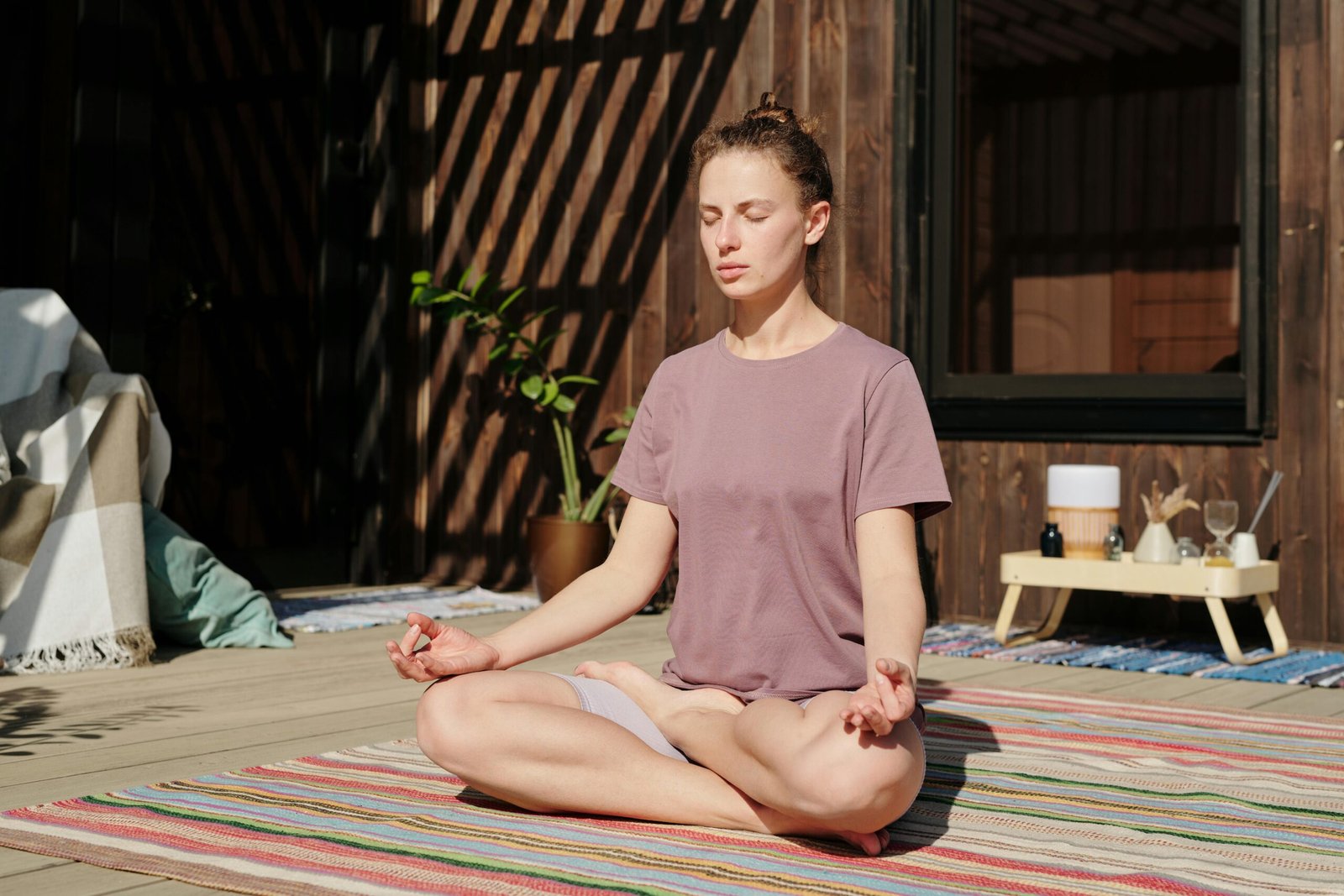
Why Most Meditation Habits Fall Apart (And How to Fix Yours)
Building a consistent meditation practice is one of the most transformative things you can do for your mental health — yet most people quit within the first two weeks. If you’ve ever started meditating with great intentions only to find your cushion gathering dust a month later, you’re not alone, and you’re not weak-willed. You’re human. The good news is that staying consistent with meditation isn’t about discipline or willpower — it’s about understanding how habits actually form, removing the friction that trips you up, and making the practice feel like something you want to return to rather than something you feel guilty about skipping.
In 2026, meditation is no longer considered a niche wellness trend. A landmark study published in JAMA Internal Medicine confirmed that mindfulness meditation programmes significantly reduce symptoms of anxiety, depression, and pain. According to the Global Wellness Institute’s 2026 report, over 500 million people worldwide now engage in some form of mindfulness or meditation practice — up from 350 million in 2022. And yet, despite growing awareness and an explosion of apps, podcasts, and guided resources, consistency remains the single biggest challenge practitioners face at every level. This article is here to change that for you.
Understanding the Science of Habit Formation in Meditation
Before we talk strategy, it helps to understand what’s actually happening in your brain when you try to build a new habit. Research from University College London found that it takes an average of 66 days — not the often-cited 21 — for a new behaviour to become automatic. Meditation is no exception. In fact, because it asks you to sit still with your thoughts (which can feel genuinely uncomfortable at first), it may take a little longer to feel effortless.
The Habit Loop and How Meditation Fits In
Neuroscientist Charles Duhigg’s habit loop model — cue, routine, reward — is enormously useful here. For meditation to stick, you need a reliable cue (a trigger that signals it’s time to meditate), a consistent routine (the practice itself), and a perceived reward (the feeling you get after). The problem many people encounter is that the reward from meditation is subtle, especially in the early days. You’re not going to feel blissful after your first five sessions. But you might notice you’re slightly less reactive in traffic, or that you slept a little better. Tuning into these small shifts is how you reinforce the habit loop before the practice becomes second nature.
What Neuroplasticity Has to Do With It
A 2026 study from Harvard’s Department of Psychiatry found that just eight weeks of consistent mindfulness meditation measurably increased grey matter density in the hippocampus — the brain region associated with learning, memory, and emotional regulation. This tells us something powerful: the brain physically changes in response to meditation. But it only changes with consistency. Think of each session as a deposit into a neurological savings account. The compound interest builds slowly, then all at once.
Practical Strategies to Stay Consistent With Your Meditation Practice
Now for the part you came for. These aren’t generic productivity tips dressed up in wellness clothing — they’re evidence-based, field-tested approaches used by meditation teachers, psychologists, and long-term practitioners across the USA, UK, Canada, Australia, and New Zealand.
Start Embarrassingly Small
The number one reason people abandon their meditation practice isn’t laziness — it’s ambition. They commit to 20 minutes a day on week one and burn out by week two. Behaviour change researcher BJ Fogg calls this the “Tiny Habits” principle: make the behaviour so small that it requires no motivation to begin. Start with two minutes. Seriously. Two minutes of focused breathing every morning will do more for your long-term consistency than a 30-minute session you dread and skip. Once the habit anchors itself — usually after four to six weeks — you can expand naturally.
Anchor Your Practice to an Existing Habit
Habit stacking, a term popularised by James Clear in Atomic Habits, involves attaching a new behaviour to one you already do automatically. For meditation, this looks like: after I pour my morning coffee, I sit and meditate for five minutes. After I brush my teeth at night, I do a two-minute body scan. This approach leverages your existing neural pathways rather than fighting to create entirely new ones. The existing habit becomes your cue, and the meditation becomes the routine that follows it without conscious effort.
Create a Dedicated Space (However Small)
Your environment shapes your behaviour more than you realise. You don’t need a meditation room or an elaborate altar. What you need is a consistent, designated spot — a particular chair, a corner of your bedroom, even a specific spot on your sofa — where you only meditate. Over time, simply sitting in that spot begins to trigger a calmer mental state. This is environmental design at its simplest, and it works. Add a small sensory anchor if it helps: a candle, a particular cushion, or even a specific playlist that signals to your nervous system that it’s time to settle.
Use a Timer, Not a To-Do List
One of the most effective ways to stay consistent with your meditation practice is to remove the mental negotiation around duration. Set a timer before you begin — even if it’s just for three minutes — and commit to not checking the clock. This simple act transfers the cognitive load to the device and frees your mind to actually meditate. Apps like Insight Timer, Calm, and Headspace remain popular in 2026, but a basic phone timer works just as well. The goal is to eliminate friction, not to accumulate features.
Track Without Obsessing
There’s a meaningful difference between tracking a habit to celebrate progress and tracking it to punish yourself when you miss. A simple paper journal or a habit-tracking app where you tick off a completed session provides a visual chain of consistency that becomes its own motivator. The key insight here comes from Jerry Seinfeld’s “don’t break the chain” method: each consecutive day you meditate adds a link. You become motivated not by the meditation itself but by the visual satisfaction of the streak. Just be careful: when you do miss a day — and you will — the rule is never miss twice in a row. One miss is an accident. Two misses is the beginning of a new habit.
Overcoming the Obstacles That Derail Your Practice
Even with the best systems in place, life gets in the way. Understanding the most common obstacles in advance means you can plan around them rather than being ambushed by them.
“I Don’t Have Time”
This is the most common objection and almost always a prioritisation issue rather than a time issue. A 2025 survey by the Mindfulness Research Institute found that 73% of people who described themselves as “too busy to meditate” spent an average of 2.4 hours daily on social media. Five minutes of meditation requires only a decision. It fits into the time you spend waiting for the kettle to boil, the commute to work, or the gap between waking up and reaching for your phone. The time exists. The practice simply needs to become a higher priority.
“My Mind Won’t Stop Racing”
Here’s one of the most important things you can understand about meditation: a busy mind during practice is not a failure. It is the practice. Every time you notice your mind has wandered and you gently return your attention to your breath or your body, you are performing a mental rep — like a bicep curl for your prefrontal cortex. The goal of meditation is not to achieve a blank mind. It never has been. The goal is to build the skill of noticing and returning. Even an “awful” session with a hundred mental wanderings counts as a full session. Show up. That’s the job.
Dealing With Travel, Illness, and Life Disruptions
Disruptions to routine are the greatest threat to any habit, and meditation is no different. The solution is to have a minimum viable practice ready for chaotic days. This might be three conscious breaths before a meeting, a two-minute body scan on a plane, or a mindful minute of eating lunch without your phone. These micro-practices won’t replace a full session, but they maintain the neural thread of the habit through the chaos, making it far easier to return to a fuller practice when life settles.
Building a Practice That Actually Fits Your Life
One reason so many people struggle to stay consistent with their meditation practice is that they’re trying to maintain someone else’s practice. Social media is full of impressive morning routines featuring hour-long silent sits, perfectly lit candles, and serene expressions. Real life rarely looks like that, and that’s completely fine.
Choosing the Right Style for You
Meditation is not one-size-fits-all. Breath awareness, body scans, loving-kindness (metta), open monitoring, transcendental meditation, walking meditation, and guided visualisation are just a handful of well-researched approaches. If one style isn’t resonating after a few weeks, try another. A 2024 meta-analysis in Psychological Bulletin found that practitioners who experimented with multiple styles in their first three months were significantly more likely to maintain a practice at the one-year mark than those who rigidly stuck to a single technique. Give yourself permission to explore.
Morning vs Evening: When Should You Meditate?
The honest answer is: whenever you’ll actually do it. Morning meditation has the research advantage of being less likely to be displaced by the demands of the day, and many practitioners report it sets a calmer tone for hours afterwards. But if you’re genuinely not a morning person, forcing a 6am sit will create resistance that undermines the whole enterprise. Evening meditation, particularly body scans or yoga nidra practices, has strong evidence for improving sleep quality. Mid-day meditation has been shown to restore cognitive performance comparably to a short nap. Your best meditation time is your most consistent one.
The Role of Community and Accountability
Humans are social animals, and belonging to a community — even a loosely connected one — dramatically increases the likelihood of sticking with any health behaviour. Online meditation communities on platforms like Reddit’s r/Meditation, local sanghas, or even a single accountability partner can provide the gentle social pressure and shared encouragement that keeps you returning to your cushion. In 2026, virtual meditation groups connecting practitioners across time zones are more accessible than ever, offering live guided sessions, group check-ins, and peer support that many solo practitioners find invaluable.
Deepening Your Practice Once Consistency Is Established
Once you’ve built a reliable daily habit — even just five to ten minutes — you’ll likely find that the practice begins to evolve on its own. You may naturally want to sit longer, explore different techniques, or integrate mindfulness into more areas of your daily life. This is the tipping point where meditation shifts from something you do to something you are, and it’s worth knowing what to expect.
Consider gradually increasing your session length by two to three minutes every two weeks rather than making large jumps that might feel unsustainable. Explore retreat options — even a one-day local retreat or a weekend mindfulness workshop can powerfully accelerate your development and renew your motivation. Reading or listening to teachers whose philosophy resonates with you builds the intellectual and emotional scaffolding that supports a long-term practice. And above all, approach your practice with curiosity rather than ambition. The moments you feel least like meditating are often the sessions that offer the most.
Frequently Asked Questions
How long should I meditate each day to see real benefits?
Research suggests that even five to ten minutes of daily meditation produces measurable benefits, including reduced stress hormones, improved focus, and better emotional regulation. A 2023 study in Science Advances found that ten minutes of daily mindfulness meditation over four weeks significantly improved working memory and attention. Longer sessions offer additional benefits, but consistency trumps duration every time. A reliable five-minute daily practice will outperform an occasional 45-minute session in the long run.
Is it normal to feel worse when I start meditating?
Yes, and it’s more common than most people realise. When you begin sitting with your thoughts rather than distracting yourself from them, emotions and mental content that you’ve been unconsciously avoiding can surface. This is sometimes called “decompression” or, in clinical circles, meditation-related adverse experiences. For most people, this passes within a few weeks as the nervous system adjusts. However, if you experience significant distress, dissociation, or worsening mental health symptoms, please pause your practice and speak with a qualified mental health professional.
What should I do when I miss several days in a row?
Start again without self-criticism. This is perhaps the single most important skill in maintaining a long-term meditation practice. Guilt and shame about missed sessions are far more damaging to consistency than the missed sessions themselves. Research on self-compassion by Dr Kristin Neff at the University of Texas consistently shows that people who treat themselves kindly after setbacks are significantly more likely to persist with healthy behaviours than those who engage in self-criticism. Miss a week? Sit down today. Even for two minutes. The chain begins again right now.
Can I meditate lying down?
Absolutely, though with one caveat: lying down increases the likelihood of falling asleep, particularly for people who are sleep-deprived or practising in the evening. If sleep is your goal, a body scan in bed is a genuinely therapeutic practice with strong evidence for improving sleep onset and quality. For a wakefulness-oriented practice, a seated position — even in a comfortable chair — tends to support greater alertness. That said, if lying down is the only position that allows you to practise consistently due to chronic pain or physical limitations, it is far better to meditate lying down than not to meditate at all.
Do I need a teacher or can I learn from an app?
Apps and online resources are excellent starting points and have made meditation genuinely accessible to hundreds of millions of people worldwide. For foundational practices — breath awareness, body scans, basic loving-kindness — a well-designed app or a quality online course provides more than enough guidance. However, if you want to go deeper, work through significant psychological material that arises, or pursue more advanced practices, working with an experienced human teacher offers something apps cannot: responsiveness, relationship, and the transmission of lived wisdom. Think of apps as the on-ramp and teachers as the open road.
How do I meditate if I have ADHD?
Meditation can be profoundly beneficial for ADHD — and also genuinely challenging given the attentional difficulties involved. The good news is that shorter, more dynamic practices tend to work better than long, static sits. Walking meditation, mindful movement, and breath-counting techniques (where you count each breath from one to ten and start again) give the mind something active to engage with. A 2025 study in the Journal of Attention Disorders found that eight weeks of adapted mindfulness training in adults with ADHD significantly improved sustained attention and impulse control. If you have ADHD, start with two to three minutes, use a guided practice to anchor your attention, and be especially compassionate with yourself when your mind wanders — which it will, frequently, and that’s absolutely fine.
What’s the difference between meditation and mindfulness?
Mindfulness is the quality of present-moment, non-judgmental awareness. Meditation is a formal practice — usually involving sitting quietly for a set time — that trains that quality. Think of it this way: meditation is the gym, mindfulness is the fitness you carry with you all day. You can be mindful while washing dishes, walking to work, or having a conversation, bringing full attention to the sensory experience of the moment. Formal meditation practice is what builds the capacity to access that mindful state more readily in daily life. Both are valuable; both reinforce each other.
Building and sustaining a meditation practice is one of the most generous things you can do for yourself — and for everyone around you. It won’t always feel effortless, it won’t always feel profound, and some days it will feel like a quiet, unremarkable two minutes of breathing in a chair. But those two minutes are doing something real. They’re rewiring your brain, softening your nervous system, and gradually shifting the ground beneath your daily life. At The Calm Harbour, we believe that every person deserves access to the peace that a consistent practice offers. Start where you are. Use what you have. Do what you can. The most important meditation session you’ll ever have is your next one — and that can begin today.
Ready to build a practice that truly lasts? Explore our guided meditations, weekly mindfulness resources, and supportive community at thecalmharbour.com — your harbour of calm is always here, waiting for you.
This article is for informational purposes only and is not a substitute for professional medical advice. If you are experiencing significant mental health challenges, please consult a qualified healthcare professional.
Leave a Reply