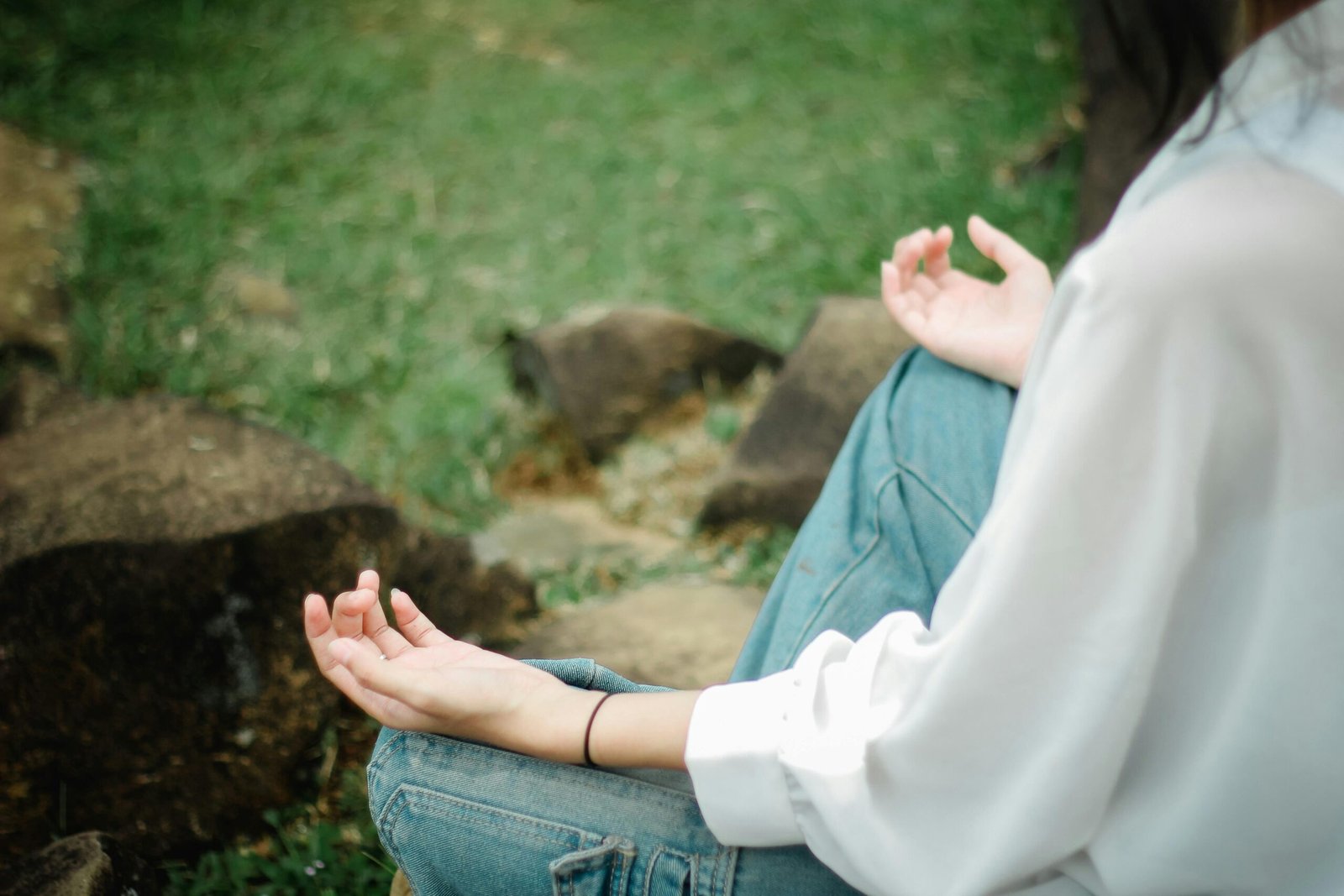
Why Anxiety Makes Meditation Feel Impossible — And How to Do It Anyway
Meditation can feel like cruel advice when your mind won’t stop racing — but with the right approach, it becomes one of the most powerful tools for anxiety relief you’ll ever find.
If you’ve ever sat down to meditate, closed your eyes, and immediately felt your thoughts accelerate into overdrive, you’re not broken — you’re having a completely normal experience. In fact, a 2024 study published in JAMA Psychiatry found that nearly 38% of people who attempt traditional meditation for the first time report increased anxiety in their initial sessions. That number is sobering, but it also explains why so many people give up before they discover what meditation can genuinely do for them.
The truth is, most anxiety sufferers are trying to meditate the wrong way — using techniques designed for already-calm minds. Learning how to meditate when you have anxiety or racing thoughts requires a different starting point, different techniques, and a fundamentally different mindset. This guide gives you exactly that: a compassionate, science-backed roadmap for making meditation work with your anxious brain, not against it.
This article is for informational purposes only and is not a substitute for professional medical advice. If you are struggling with severe anxiety, please consult a qualified mental health professional.
Understanding the Anxious Brain Before You Begin
Before diving into technique, it helps to understand what’s actually happening inside your head. Anxiety is not a character flaw or a lack of willpower — it’s a physiological state. When you’re anxious, your amygdala (the brain’s threat-detection centre) is firing frequently, flooding your body with cortisol and adrenaline. Your nervous system is in a state of heightened arousal, sometimes called sympathetic dominance or the “fight-or-flight” response.
This is why sitting quietly and trying to “clear your mind” often backfires. A hyperactivated nervous system interprets stillness as suspicious. The silence gives your anxious thoughts more airtime, not less. Understanding this removes the shame from the experience — your mind isn’t failing at meditation; it’s doing exactly what an anxious nervous system does.
The Default Mode Network and Racing Thoughts
Neuroscience has identified a brain network called the Default Mode Network (DMN), which activates when we’re not focused on external tasks. It’s responsible for mind-wandering, self-referential thinking, and rumination — all of which are amplified in anxiety. A landmark 2023 study from Stanford’s Department of Psychiatry confirmed that people with generalised anxiety disorder show significantly higher DMN activity at rest, which is precisely why “just sitting quietly” can feel like jumping into a mental tornado.
The goal of meditation for anxious people, then, isn’t to silence the DMN — it’s to gently redirect attention away from it, over and over, without judgment. That repetitive redirection is the practice. Each time you notice you’ve drifted into worry and return your focus, you’re strengthening neural pathways associated with emotional regulation. Over time, this literally rewires how your brain responds to stress.
Choosing the Right Type of Meditation for Anxiety
Not all meditation is created equal, and choosing the wrong style is one of the biggest reasons people with anxiety give up. Here’s a breakdown of the approaches that work best for racing minds.
Breath-Focused Meditation with a Twist
Standard breath awareness asks you to observe your breathing without changing it. For anxious individuals, this can quickly become a source of hyper-focus and worry (“Am I breathing wrong? Is my heart racing?”). A more effective variation is paced breathing meditation, where you actively regulate the breath using a specific rhythm. The 4-7-8 technique — inhale for 4 counts, hold for 7, exhale for 8 — has been shown in multiple clinical trials to activate the parasympathetic nervous system within minutes. The extended exhale is key: it stimulates the vagus nerve, which acts as a natural brake on your body’s stress response.
Body Scan Meditation
Body scan is often more accessible than pure thought-observation for anxious meditators because it gives your attention somewhere concrete to go. You move your awareness slowly from the top of your head down to your feet, simply noticing physical sensations without trying to change them. This pulls your focus out of the future (where anxiety lives) and into the present moment of your body. Research published in Psychological Science in 2025 found that body scan meditation reduced self-reported anxiety scores by an average of 27% after just eight weeks of regular practice.
Loving-Kindness Meditation (Metta)
Loving-kindness meditation involves silently repeating warm phrases — like “May I be well. May I be peaceful. May I be free from suffering” — directed first toward yourself and then outward toward others. This technique is particularly effective for social anxiety and the harsh self-criticism that often accompanies anxious thinking. When your mind is spinning critical or catastrophic thoughts, giving it compassionate language to repeat serves as a healthy anchor.
Movement-Based and Walking Meditation
For those who find stillness intolerable, movement-based practices like walking meditation or mindful yoga are not a lesser alternative — they’re often a superior starting point. Walking meditation involves synchronising slow, deliberate steps with breath and awareness of bodily sensations. It honours the anxious body’s need for some outlet of physical energy while still cultivating mindfulness. Many practitioners find that after several weeks of walking meditation, seated practice becomes much more accessible.
A Step-by-Step Beginner Framework for Anxious Meditators
Theory is useful, but what you need is a practical path forward. The following framework is specifically designed for people learning how to meditate when you have anxiety or racing thoughts, starting from where you actually are — not where you think you should be.
Step 1 — Shrink the Time Commitment Radically
Forget the idea that you need to meditate for 20 or 30 minutes. For anxious beginners, two to three minutes is a legitimate and effective starting point. Research from the University of Cambridge published in 2025 confirmed that even micro-meditation sessions of three to five minutes, practised consistently over four weeks, produced measurable reductions in cortisol levels. Start with two minutes. Succeed at two minutes. Then build from there. Giving yourself a tiny, achievable goal removes the performance pressure that makes anxiety worse.
Step 2 — Create a Sensory Anchor Before You Begin
Before closing your eyes, ground yourself using the 5-4-3-2-1 technique: identify five things you can see, four you can touch, three you can hear, two you can smell, and one you can taste. This activates your sensory cortex and helps interrupt the runaway thought-loop before your session even begins. Think of it as a pre-flight checklist for your nervous system.
Step 3 — Use Guided Audio Instead of Sitting in Silence
Silence can be overwhelming for anxious minds. A human voice guiding you through the practice gives your attention something benign to follow, reducing the likelihood of your mind hijacking the session with worry. Apps like Insight Timer, Calm, and Headspace all offer anxiety-specific guided meditations. Many are free to access in 2026. Look for sessions labelled specifically for anxiety, restlessness, or overthinking rather than generic “relaxation” tracks.
Step 4 — Name Your Thoughts Without Engaging Them
When racing thoughts arrive during your session — and they will — try the technique of labelling. Silently note the thought category: “planning,” “worrying,” “remembering,” “judging.” This single act of labelling creates a tiny but crucial distance between you and the thought. You shift from being swept away by the thought to observing it. Neuroscientist Dr. Dan Siegel calls this “name it to tame it” — and brain imaging studies support the idea that labelling emotional experiences reduces amygdala activation almost immediately.
Step 5 — Embrace Imperfection as the Practice
The most important mindset shift for anxious meditators is this: a “bad” meditation session — one full of distraction, fidgeting, and racing thoughts — is not a failed session. It is the session. Every moment you noticed you’d wandered and returned your attention is a moment of successful meditation. There is no arrival point, no perfect stillness to achieve. The anxiety about meditating correctly is itself something to notice with curiosity, not to fix.
Common Mistakes That Make Anxiety Worse During Meditation
Even well-intentioned practice can backfire if you fall into these common traps.
- Trying to stop thoughts: Actively fighting your thoughts amplifies them. The goal is to observe thoughts without feeding them, not to achieve an empty mind.
- Meditating during peak anxiety moments only: Like any skill, meditation works best when practised regularly during calm moments, so the neural pathways are already established when you need them most.
- Choosing the wrong environment: Meditating in a cluttered, noisy, or uncomfortable space increases mental agitation. A consistent, slightly dim, quiet space signals safety to your nervous system over time.
- Skipping the transition period: Going straight from scrolling your phone into meditation is like sprinting from a full stop. Give yourself two to three minutes of low-stimulation activity — stretching, slow breathing, or simply sitting still — before beginning.
- Measuring success by how calm you felt: Calmness is a side effect, not the goal. The goal is awareness. Some sessions will feel chaotic. Track consistency, not comfort.
Building a Sustainable Practice Around Your Anxiety
Learning how to meditate when you have anxiety or racing thoughts is only half the journey — keeping the practice alive is the other half. Here’s how to make it stick.
Anchor It to an Existing Habit
Habit stacking — attaching a new behaviour to an existing one — dramatically increases follow-through. Pair your meditation with something you already do daily: right after brushing your teeth in the morning, before your first cup of coffee, or directly after arriving home from work. The trigger creates an automatic cue that removes the need for daily willpower decisions.
Track Progress Compassionately
Keep a brief journal — even just two or three sentences after each session. Note how you felt before, any observations during, and how you felt after. Over weeks, you’ll begin to see patterns that motivate continued practice. Many anxious meditators are surprised to discover that even sessions that felt terrible were followed by a noticeable calm in the hours afterward.
Know When to Seek Professional Support
Meditation is a powerful complementary practice, but it’s not a replacement for professional mental health care. If your anxiety is significantly impacting your daily life, relationships, or ability to work, please reach out to a licensed therapist or psychiatrist. Cognitive Behavioural Therapy (CBT) and Acceptance and Commitment Therapy (ACT) pair particularly well with meditation practice and have strong evidence bases for anxiety treatment. In the USA, UK, Canada, Australia, and New Zealand, telehealth options have expanded significantly by 2026, making access to qualified professionals easier than ever.
Frequently Asked Questions
Is it normal for meditation to make my anxiety worse at first?
Yes, completely normal. Research shows that a significant minority of new meditators experience increased anxiety early on — sometimes called “meditation-induced anxiety” or relaxation-induced anxiety. This typically happens because slowing down removes distractions that were masking underlying tension. Starting with very short sessions (two to three minutes), using guided audio, and choosing movement-based or breath-regulated techniques rather than silent open awareness can help ease this transition significantly.
How long before I notice results from meditating with anxiety?
Most people notice subtle shifts — slightly better sleep, a moment of pause before reacting to stress, feeling marginally less overwhelmed — within two to three weeks of consistent daily practice. More significant changes in anxiety levels are typically reported at the six to eight week mark, which aligns with the timeframe most clinical studies use to measure outcomes. Consistency matters far more than session length.
What should I do if I have a panic attack during meditation?
First, open your eyes. Closed eyes can intensify internal focus and heighten panic sensations. Ground yourself immediately using physical anchors — press your feet firmly into the floor, hold a cool object, splash cold water on your wrists. Focus exclusively on slow, extended exhales rather than breath observation. If panic attacks occur regularly during meditation, speak with a mental health professional before continuing unsupported practice. Therapist-guided exposure to meditation in a clinical context can be highly effective.
Can I meditate lying down if sitting makes me anxious?
Absolutely. While sitting upright is traditionally recommended because it reduces the likelihood of falling asleep, there is no rule that makes lying down less valid — especially for anxious individuals who experience physical discomfort when sitting still. Body scan meditations, in particular, are often taught lying down. If sleep is a concern, try lying on your back with your knees bent and feet flat on the floor, which keeps the body slightly more alert than the fully supine position.
Are meditation apps actually effective for anxiety?
Evidence is growing. A 2024 meta-analysis in npj Digital Medicine reviewed 23 randomised controlled trials and found that app-based mindfulness interventions produced statistically significant reductions in anxiety symptoms compared to control groups, with effect sizes comparable to low-intensity face-to-face interventions. Apps work best as a gateway or supplement rather than a standalone treatment for clinical anxiety. Look for apps developed with clinical input and peer-reviewed research backing their programmes.
How is meditation different from just zoning out or daydreaming?
This is a great question and a common source of confusion. Daydreaming is passive and unconscious — your mind wanders and you follow it without awareness. Meditation is the deliberate, active practice of noticing where your attention is and intentionally redirecting it. The moment you realise you’ve drifted and gently bring yourself back — that is meditation. Zoning out lacks that metacognitive awareness. It’s the awareness itself, not the stillness, that creates the neurological and psychological benefits.
Do I need to meditate every day or can I skip days?
Daily practice produces faster and more lasting results, but skipping occasional days won’t undo your progress. Think of it like physical exercise — consistency over weeks and months matters more than perfection on any given day. If you miss a day, simply begin again the next without self-criticism. The harsh inner commentary about “failing” at meditation is itself a perfect opportunity to practise the non-judgmental awareness that meditation cultivates. One missed day is never a reason to abandon the practice entirely.
Your Next Step Starts With One Breath
If you take nothing else from this guide, take this: you don’t need a quiet mind to begin meditating — you just need the willingness to begin. The racing thoughts, the restlessness, the frustration — none of it disqualifies you. In fact, every one of those experiences is material to work with, not obstacles to overcome before you start. Learning how to meditate when you have anxiety or racing thoughts is not about becoming a different person; it’s about developing a kinder, more spacious relationship with the person you already are.
Start with two minutes today. Breathe slowly. Notice where your mind goes. Gently return. That’s it. That’s the whole practice. And in that simple, imperfect, beautifully human act, something quietly powerful begins to grow. The Calm Harbour is here with you every step of the way — you are not alone in this, and you are more capable of finding stillness than you currently believe.
Leave a Reply