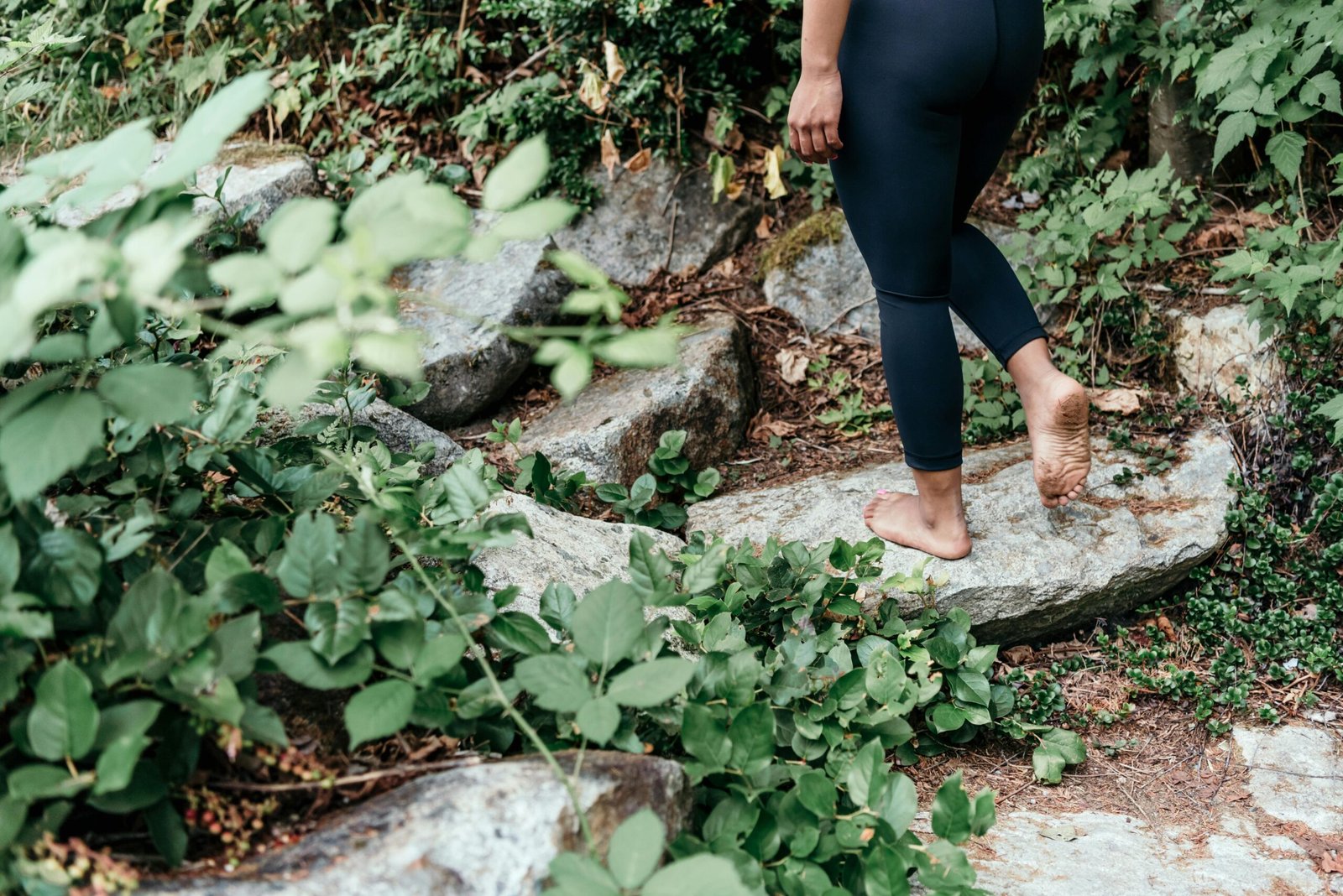
Why Your Daily Walk Could Be the Most Powerful Mental Reset You’re Not Using
Mindful walking transforms an ordinary stroll into a profound mental wellness practice — and in 2026, it’s one of the most accessible forms of meditation available to anyone, anywhere. You don’t need a cushion, a studio, or even a quiet room. You just need your body, your breath, and a willingness to pay attention. Whether you’re walking through a city park in Toronto, along a coastal path in New Zealand, or between meetings in London, this practice meets you exactly where you are.
Most of us walk every day without really being present for a single step. We’re mentally rehearsing difficult conversations, scrolling through our phones, or replaying moments from yesterday. Our bodies are moving, but our minds are somewhere else entirely. Mindful walking invites you to close that gap — to bring your awareness back into your body and into the present moment, one step at a time.
What makes this practice so remarkable is its simplicity. Research published in the Journal of Health Psychology found that mindful walking significantly reduced cortisol levels and improved mood more effectively than regular walking alone. A 2024 meta-analysis of 27 studies confirmed that combining movement with mindfulness produces measurably greater reductions in anxiety and depression symptoms compared to either practice on its own. And a landmark University of Michigan study found that just 10 minutes of mindful outdoor walking reduced rumination — that exhausting mental loop of negative thinking — by up to 45%.
So let’s explore exactly how to turn your next walk into a meditation, with practical techniques you can use today.
The Science Behind Mindful Walking and Mental Wellness
Before diving into technique, it helps to understand why this practice works so powerfully on the mind and body. When you walk mindfully, you’re activating several interconnected systems that collectively support mental health in ways that sitting meditation sometimes can’t.
Movement as a Mood Regulator
Walking naturally elevates serotonin and dopamine — the neurotransmitters most closely linked to mood regulation and motivation. When you layer mindfulness on top of physical movement, you amplify these effects. Your nervous system receives a dual signal: the body is safe and active, and the mind is present rather than catastrophising. This combination is particularly powerful for people who struggle with traditional seated meditation, where a quiet room can sometimes make anxiety feel louder rather than quieter.
In 2026, therapists across the UK and Australia are increasingly recommending mindful walking as a first-line complement to therapy, particularly for clients managing generalised anxiety disorder and mild to moderate depression. It’s not a replacement for professional care — but it’s a remarkably effective daily tool.
The Bilateral Stimulation Benefit
There’s another layer to why walking meditation works so well. The left-right, alternating movement of walking is a form of bilateral stimulation — the same principle used in EMDR (Eye Movement Desensitisation and Reprocessing) therapy for trauma. This rhythmic cross-body movement helps the brain process emotional material more effectively, reducing the emotional charge attached to stressful thoughts. Many people find that difficult feelings feel more manageable after a mindful walk, even if nothing externally has changed.
Grounding Through the Senses
Mindfulness fundamentally works by anchoring attention in present-moment sensory experience. Walking is uniquely suited to this because it engages all five senses simultaneously. The feel of the ground beneath your feet, the temperature of the air on your skin, the sounds around you, the colours and shapes entering your field of vision — these become your anchors. Each sensory touchpoint is an opportunity to return from mental wandering back into the living, breathing moment.
Preparing Your Mind and Body Before You Begin
One of the most common mistakes people make when starting mindful walking is treating it like a regular walk with eyes open slightly wider. The preparation matters. A short intentional transition into the practice makes an enormous difference in how quickly you settle into a meditative state.
Set a Clear Intention
Before you take your first step, pause for thirty seconds and set an intention. This doesn’t need to be complicated or spiritual. It might simply be: “For the next twenty minutes, I’m going to stay as present as I can.” Or perhaps: “I’m walking to calm my nervous system.” Or even: “I’m walking to give my mind a rest.” The act of consciously setting an intention signals to your brain that this time is different — it’s purposeful, not habitual.
Choose Your Duration and Route Mindfully
You don’t need a long walk for this practice to be effective. Research suggests that even 10 to 15 minutes of mindful walking produces measurable benefits. If you’re new to the practice, start with a familiar route so you’re not using cognitive energy for navigation. Over time, you can vary your environment — research consistently shows that natural settings like parks, forests, and coastal paths amplify the mental health benefits of mindful walking, a phenomenon researchers call the restorative environment effect.
Leave the Earbuds Behind
This one might feel uncomfortable at first, especially if you’re used to walking with podcasts or music. But the sounds around you — even traffic, wind, birdsong, or rain — are not distractions. They’re part of your sensory field and can become powerful anchors for your attention. Give yourself permission to simply listen to your environment as though you’ve never heard it before.
Core Techniques for Mindful Walking Meditation
There are several approaches you can take, and the best one is always the one that resonates with you. Feel free to try each technique and mix elements from different approaches as you develop your own personal practice.
The Step-by-Step Body Awareness Method
This is the most traditional form of walking meditation, rooted in Buddhist Vipassana practice. Begin by walking at a slightly slower pace than usual — not unnaturally slow, just thoughtful. Direct your attention entirely to the physical sensations of walking. Notice:
- The lifting of your foot from the ground
- The movement of your leg swinging forward
- The moment your heel makes contact with the ground
- The rolling sensation as your weight shifts across your foot
- The push-off from your toes as you step again
Each step becomes a complete meditation object. When your mind wanders — and it will, repeatedly, because that’s what minds do — you simply notice that it has wandered and gently return your attention to the sensation of walking. There’s no frustration needed. Every return is a small act of mental training, not a failure.
The Breath-Synchronised Walking Method
This approach links your breath to your steps, creating a natural rhythm that quickly settles the nervous system. Begin by breathing naturally, then start to count your steps in sync with your breath. Inhale for three steps, exhale for four steps — or find whatever ratio feels comfortable and sustainable for your body. The slightly longer exhale activates the parasympathetic nervous system (your rest-and-digest mode), helping to counteract the stress response.
This method is particularly effective for people walking in busier urban environments where sensory attention to steps alone can feel difficult. The breath gives you a consistent internal anchor regardless of external noise or stimulation.
The Sensory Expansion Method
Rather than narrowing attention to one thing, this technique involves progressively widening your sensory awareness like expanding rings on water. Start with physical sensation — the ground beneath your feet. After a minute or two, expand to include sound — what can you hear nearby, and what can you hear in the distance? Then expand to include vision — not focusing on any one thing, but holding a soft, open gaze. Finally, bring in smell and even taste if relevant.
This method is especially well-suited to nature walks and has been shown to activate what neuroscientists call the default mode network in a healthy, restful way — distinct from the anxious, ruminating activation that happens when the mind is left to wander without direction.
The Gratitude and Curiosity Walk
This is a wonderful variation for days when formal technique feels too rigid. As you walk, consciously look for things that spark a small moment of appreciation or curiosity. It might be the texture of bark on a tree, the way light is hitting a puddle, or the sound of children playing in the distance. You’re not forcing positivity — you’re simply training your attention to register beauty and interest that’s already present but usually filtered out by our preoccupied minds.
This variation draws on positive psychology research showing that deliberately directing attention toward positive stimuli — even briefly — can interrupt negative cognitive patterns and shift emotional baseline over time.
Overcoming Common Challenges in Mindful Walking Practice
Even with the best intentions, most people encounter a few predictable obstacles when starting out. Knowing these in advance makes them far less discouraging.
When Your Mind Simply Won’t Settle
Some days your thoughts will feel like a runaway train and no amount of sensory anchoring seems to help. On those days, try naming your thoughts as they arise: “planning,” “worrying,” “remembering.” This labelling technique, backed by neuroscientific research from UCLA, has been shown to reduce the emotional intensity of thoughts by activating the prefrontal cortex — the rational, observing part of your brain — rather than the amygdala, where emotional reactivity lives. You don’t need to stop the thoughts. You just need to observe them from a slight distance.
Feeling Self-Conscious in Public
Walking slowly or appearing to be unusually focused can feel strange in public spaces. The honest truth is that nobody is paying as much attention to you as you think they are — a well-documented cognitive bias called the spotlight effect. But if slowing down feels uncomfortable, simply practise mindful walking at your normal pace. You can be completely present, breathing consciously, and noticing your sensory environment while walking at an entirely ordinary speed. Nobody will notice a thing.
Consistency and Building a Habit
Like any mindfulness practice, mindful walking deepens with regularity. The most effective approach in 2026 is habit stacking — attaching your mindful walk to an existing routine. Walk mindfully on your commute, during your lunch break, or as part of your morning routine after making coffee. Even three or four mindful walks per week, sustained over six to eight weeks, produces measurable changes in stress reactivity and attentional control according to current mindfulness-based stress reduction (MBSR) research.
Bringing Mindful Walking Into Everyday Life
The most transformative aspect of this practice isn’t the dedicated 20-minute walk — it’s the way mindfulness begins to bleed into every walk you take. Over time, you may find yourself automatically dropping into sensory awareness while walking to your car, across a parking lot, or down a hospital corridor. These micro-moments of mindfulness throughout the day compound into a genuinely different relationship with your own mind.
In workplace wellness programmes across the US, Canada, and the UK, mindful walking sessions are increasingly being built into the workday as structured mental health breaks. Companies reporting on their 2025–2026 employee wellbeing data are finding that staff who participate in regular mindful movement practices show lower burnout rates and better emotional regulation under pressure. This isn’t a trend — it’s a recognition of something ancient that modern neuroscience has finally confirmed.
You can also bring elements of mindful walking into challenging moments. If you’re heading into a difficult meeting or a stressful appointment, the two-minute walk from your car to the building becomes an opportunity to breathe, ground, and arrive with more presence. If you’ve just received difficult news, a mindful walk can help your nervous system begin to metabolise the emotional impact rather than simply suppressing it.
The practice doesn’t ask you to be calm before you begin. It asks you to show up exactly as you are — anxious, distracted, tired, or sad — and walk with that. The healing isn’t in achieving a particular state. It’s in the act of returning, again and again, to the simple, profound fact of being alive and moving through the world.
Frequently Asked Questions About Mindful Walking
How is mindful walking different from regular walking?
Regular walking is typically done on autopilot — your body moves while your mind is elsewhere. Mindful walking involves deliberately directing your attention to the present-moment experience of walking: the physical sensations, your breath, and your sensory environment. This intentional focus is what activates the meditation-like benefits and distinguishes it from ordinary exercise.
Do I need to walk slowly to practise mindful walking?
No. While slowing down can help when you’re first learning, mindful walking can be practised at any pace, including a brisk walk or even a jog. What matters is the quality of your attention, not your speed. Many people find that their normal walking pace works perfectly well once they’ve developed some familiarity with the practice.
How long should a mindful walking session be?
Research supports benefits starting from as little as 10 minutes. For beginners, 10 to 20 minutes is a comfortable and effective range. More experienced practitioners often extend sessions to 30 to 45 minutes. The most important factor isn’t duration — it’s consistency over time. A 10-minute mindful walk every day will outperform a 45-minute session once a month.
Can mindful walking help with anxiety?
Yes, significantly. Mindful walking addresses anxiety through multiple pathways simultaneously: it activates the parasympathetic nervous system through rhythmic movement and slow exhalation, it interrupts rumination cycles by redirecting attention to sensory experience, and it gently builds the attentional control needed to step back from anxious thoughts. That said, if your anxiety is severe or significantly impacting your daily life, please speak with a qualified mental health professional. This practice works best as part of a broader support strategy.
What if I live in a city with no access to nature?
Urban mindful walking is entirely valid and effective. City environments offer rich sensory experiences — architecture, light patterns, ambient sound, temperature changes, the movement of people. Research from 2024 and 2025 confirms that mindful urban walking still produces meaningful reductions in stress and improved mood. If occasional access to natural settings is possible — a city park, a riverside path, a tree-lined street — prioritise those when you can, but don’t let their absence stop you from practising daily.
Can children practise mindful walking?
Absolutely. Mindful walking is one of the most child-friendly mindfulness practices available because it incorporates natural curiosity and movement. For children, you can frame it as a “noticing walk” — how many different sounds can you hear? What’s the most interesting texture you can find? What colours can you spot? Schools in the UK, Canada, and Australia are increasingly incorporating structured mindful walks into their wellbeing curricula with excellent results for focus and emotional regulation.
Is mindful walking a substitute for therapy or medication?
No. Mindful walking is a supportive wellness practice with genuine, research-backed mental health benefits — but it is not a substitute for professional mental health treatment. If you are managing a diagnosed mental health condition, please work with a qualified healthcare professional. Mindful walking can be a powerful complement to therapy or medical treatment, but should never replace it.
This article is for informational purposes only and is not a substitute for professional medical advice, diagnosis, or treatment. Always seek the guidance of a qualified healthcare provider with any questions you may have regarding a mental health condition.
Your next walk — whether it starts in ten minutes or tomorrow morning — is an open door. You don’t need to be a meditator, an athlete, or a spiritual seeker to step through it. You just need to be willing to be where your feet are. So take a breath, step outside, and let the ground beneath you be exactly enough. You already have everything this practice requires — and every mindful step you take is a quiet, powerful act of care for your own wellbeing. The Calm Harbour is always closer than you think.
Leave a Reply