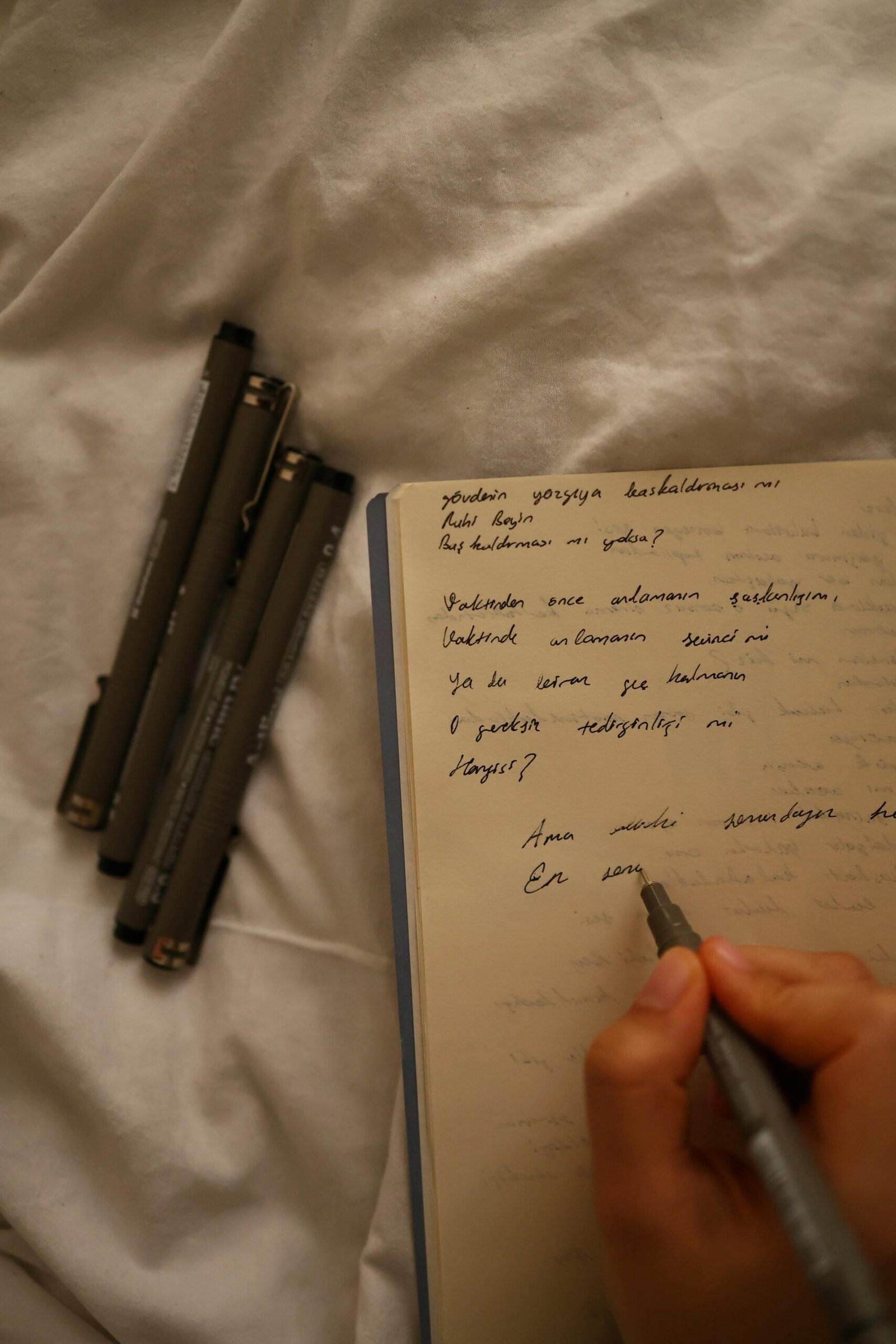
Why Writing Down Your Worries Actually Works
Anxiety affects over 284 million people worldwide, yet one of the most powerful tools for managing it costs nothing more than a pen and paper — and using journaling prompts to help you process anxiety is now backed by a growing body of neuroscience research.
If you’ve ever tried to journal and stared at a blank page not knowing where to start, you’re not alone. Unstructured journaling can sometimes make anxiety worse, pulling you deeper into rumination rather than offering relief. That’s exactly where targeted prompts become transformative. They act like a gentle hand on your shoulder, guiding your thoughts toward clarity, self-compassion, and — eventually — calm.
This guide is designed to give you everything you need: the science behind why journaling works, how to build a consistent practice, and dozens of thoughtfully crafted prompts that meet you wherever you are emotionally. Whether your anxiety shows up as a tight chest at 2 a.m. or a low hum of dread before a big meeting, there’s something here for you.
This article is for informational purposes only and is not a substitute for professional medical advice. If you are experiencing severe anxiety, please consult a qualified mental health professional.
The Science Behind Journaling and Anxiety Relief
Before we dive into the prompts themselves, it helps to understand why putting thoughts on paper has such a measurable impact on mental health. This isn’t just anecdotal wellness advice — the research is genuinely compelling.
What Happens in Your Brain When You Write
When anxiety spikes, your amygdala — the brain’s threat-detection centre — goes into overdrive. Your prefrontal cortex, which handles rational thinking and emotional regulation, gets essentially drowned out. Writing engages the prefrontal cortex in a deliberate way, helping to restore that balance. A landmark study published in Psychological Science found that expressive writing about worries before a high-stakes task actually improved performance, because it freed up cognitive resources that anxiety had been consuming.
A 2025 meta-analysis published in the Journal of Affective Disorders reviewed 36 studies on expressive writing and found that consistent journaling reduced self-reported anxiety symptoms by an average of 28% over eight weeks. Meanwhile, research from the University of Texas at Austin confirms that writing about emotional experiences helps process traumatic or stressful events by creating a coherent narrative — essentially helping your brain file the experience away rather than keeping it on an endless, exhausting loop.
Journaling vs. Rumination — A Critical Difference
It’s worth drawing a clear line here. Rumination — replaying the same anxious thoughts over and over — is associated with increased depression and worsened anxiety. Journaling done without direction can sometimes tip into rumination. That’s why prompts are so valuable: they shift your writing from circular thinking toward reflective processing, which encourages perspective-taking, problem-solving, and emotional acknowledgment without getting stuck.
The key distinction is movement. Good journaling prompts take you somewhere. They help you observe your anxiety rather than becoming absorbed by it — a skill that mirrors what therapists call cognitive defusion, a core technique in Acceptance and Commitment Therapy (ACT).
Building a Journaling Practice That Actually Sticks
Even the best prompts won’t help if you never actually use them. The good news is that research suggests even 15 minutes of journaling three times a week is enough to produce measurable mental health benefits. Here’s how to set yourself up for success.
Choose Your Format
Some people swear by a beautiful notebook and a favourite pen — the tactile ritual becomes part of the calming process itself. Others prefer digital journaling apps like Day One or Reflectly, which offer privacy, searchability, and prompts built right in. A 2026 survey by the Global Wellness Institute found that 61% of people who maintained a consistent journaling habit for over three months reported using a hybrid approach — handwriting for emotional processing and digital tools for tracking patterns over time. Use whatever format you’ll actually return to.
Set the Scene
- Pick a consistent time — morning journaling can set an intentional tone for the day; evening journaling helps offload the day’s emotional weight before sleep.
- Keep your journal visible and accessible, not buried in a drawer.
- Create a small ritual around it: a warm drink, a few deep breaths, or a brief body scan before you begin.
- Aim for a quiet space, but don’t let imperfect conditions be an excuse not to start.
Let Go of “Good” Writing
Your journal is not a performance. Grammar, spelling, and eloquence are completely irrelevant. What matters is honesty. Give yourself explicit permission to write messily, to contradict yourself, to write the same thing five times if that’s what comes out. The act of externalising thoughts — getting them out of your head and onto the page — is where the healing happens, not in the prose quality.
Journaling Prompts to Help You Process Anxiety — By Situation
Different moments of anxiety call for different kinds of reflection. The prompts below are organised by what you might be experiencing, so you can flip straight to what feels most relevant rather than scrolling through a generic list. These are some of the most effective journaling prompts to help you process anxiety that mental health professionals and wellness practitioners recommend in 2026.
When You’re in the Middle of an Anxious Moment
These grounding prompts are designed for high-activation moments — when your heart is racing and your thoughts are spiralling. Keep them short. Keep them present-tense.
- What is happening in my body right now? Where exactly do I feel the anxiety? Describe it without judgment — is it tight, heavy, buzzing, cold?
- What am I afraid is going to happen? Write it out plainly, as if explaining it to a calm, caring friend.
- On a scale of 1–10, how intense is this feeling? What would it take to move it down just one point?
- What do I know to be true right now, in this moment? List five factual, grounded things you can observe around you.
- If this anxiety were a weather system, what would it look like? And what does the sky look like behind it?
For Processing Worry About the Future
Anticipatory anxiety — worrying about things that haven’t happened yet — is one of the most common and exhausting forms of anxiety. These prompts help you examine that worry with compassionate curiosity.
- What is the specific thing I’m most worried about? Can I name it clearly and precisely?
- What is the worst realistic outcome (not the catastrophic imagined one)? How would I cope with that?
- What is the best realistic outcome? What would I feel like if that happened?
- What is within my control here, and what isn’t? Can I write two separate lists?
- Has my anxiety ever predicted the future accurately? What has actually happened when I was this worried before?
- What would I tell a close friend if they were feeling this exact worry about their life?
For Anxiety Rooted in the Past
Sometimes anxiety is less about tomorrow and more about unprocessed experiences — things that felt unsafe, shameful, or overwhelming. These prompts are gentle entry points into that territory. Go at your own pace.
- Is there a memory or past experience that feels connected to how I’m feeling today? I don’t have to write about it in detail — just acknowledge its presence.
- What did I need back then that I didn’t receive? Can I offer that to myself now, in words?
- How have I grown or changed since a difficult time I’ve been through? What does that tell me about my resilience?
- What story am I telling myself about who I am, based on things that happened in my past? Is that story still serving me?
For Social Anxiety and Fear of Judgment
Social anxiety affects approximately 15 million adults in the United States alone, making it one of the most prevalent anxiety disorders. These prompts target the core fear that underlies most social anxiety: the fear of how others perceive us.
- What specifically am I afraid others will think or say about me? Write it out without softening it.
- How much mental energy am I spending on managing other people’s opinions of me? Is that a fair trade?
- When have I judged someone else harshly in a social situation? Or — more likely — when have I been far more focused on myself than on judging others?
- What would change in my life if I gave myself permission to be imperfect in public?
- Who in my life makes me feel safe and accepted exactly as I am? What do they see in me?
For Late-Night Anxiety and Sleep Disruption
The 2–4 a.m. spiral is a real and well-documented phenomenon — cortisol levels and cognitive arousal patterns make early morning hours a peak time for anxious thinking. These prompts can help you externalize the noise enough to return to rest.
- What thoughts are keeping me awake right now? I’ll write them all down — every single one — so my brain knows they’ve been recorded and doesn’t need to keep repeating them.
- Which of these worries actually require action tonight? Almost certainly none. Can I give them a specific time tomorrow to be addressed?
- What is one thing I’m genuinely grateful for today, even if today was hard?
- What would a good sleep mean for me tomorrow? How do I want to feel when I wake up?
Advanced Techniques to Deepen Your Journaling Practice
Once you’ve built a basic habit, these approaches can take your use of journaling prompts to process anxiety to a deeper level of insight and healing.
The Unsent Letter
Write a letter to your anxiety as if it were a person. Tell it what it’s costing you, what you understand about why it’s there, and what you need from it going forward. This technique, rooted in narrative therapy, creates psychological distance and often surfaces surprisingly compassionate insights — because most anxiety, when examined, is trying (however clumsily) to protect you from something.
The Observer Prompt
Write about yourself in the third person: “She is sitting at her desk, feeling anxious about the presentation tomorrow. She notices her shoulders are tight. She’s been here before, and she has always found a way through.” This small linguistic shift activates the same brain regions involved in self-compassion and significantly reduces emotional flooding, according to research from Michigan State University.
Tracking Patterns Over Time
Every few weeks, read back through your journal entries and look for patterns. What triggers consistently appear? What times of day, what relationships, what types of situations? This kind of meta-reflection transforms individual journaling sessions into a longitudinal map of your inner life — one that can be incredibly valuable to share with a therapist or counsellor if you’re working with one.
The “What I Know Now” Entry
After an anxious episode has passed, write a brief entry from the perspective of someone who got through it. What did you learn? What coping strategies helped? What would you tell your anxious self from a few days ago? This creates a personal archive of evidence that anxiety passes — a resource you can draw on the next time it feels permanent.
Combining Journaling With Other Anxiety-Support Practices
Journaling is most powerful when it’s part of a broader approach to mental wellness rather than a standalone fix. Here are complementary practices that research consistently supports in 2026.
- Mindfulness meditation: Even 10 minutes of daily mindfulness significantly amplifies the reflective capacity you bring to your journaling. Apps like Headspace and Calm remain highly effective entry points, with 2026 clinical trials confirming their efficacy for mild-to-moderate anxiety.
- Physical movement: A 2025 study in JAMA Psychiatry confirmed that 150 minutes of moderate weekly exercise reduces anxiety symptoms comparably to first-line medication in many cases. Journaling after exercise, when the nervous system is more regulated, produces particularly rich reflective writing.
- Therapy: Cognitive Behavioural Therapy (CBT) and ACT both integrate well with journaling. Many therapists now assign specific prompts as homework between sessions. If you’re using these journaling prompts to help you process anxiety and finding that certain topics feel overwhelming or impossible to move through, that’s a signal to seek professional support.
- Sleep hygiene: Consistent sleep and anxiety have a bidirectional relationship — poor sleep worsens anxiety, and anxiety disrupts sleep. A brief journaling session before bed can serve as a cognitive offloading ritual that improves sleep onset.
Frequently Asked Questions
How long should I spend on each journaling prompt?
There’s no fixed rule, but a good starting point is 10–15 minutes per session. Some prompts will flow easily and you may write for 30 minutes; others might yield a single honest paragraph, and that’s equally valuable. The goal is quality of reflection, not quantity of words. Set a gentle timer if it helps you commit to the practice without feeling like it will consume your whole evening.
Can journaling make anxiety worse?
In some cases, unstructured journaling that tips into rumination can temporarily intensify anxious feelings. This is less likely when you use structured prompts, as they encourage reflective processing rather than looping. If you consistently feel worse after journaling, consider writing for shorter periods, sticking to forward-looking or gratitude-based prompts, or discussing the experience with a therapist who can help you process difficult material safely.
Do I have to write by hand, or is typing just as effective?
Both methods offer meaningful benefits. Handwriting tends to slow the thought process down and engage a slightly different set of motor and cognitive pathways, which some people find more grounding. Typing allows faster output and is easier for those with physical limitations. The 2026 Global Wellness Institute research cited earlier found no statistically significant difference in outcomes between handwritten and digital journaling — what mattered most was consistency, not medium.
What if I don’t know how to answer a prompt?
Start with exactly that: “I’m not sure how to answer this, and I notice that feels uncomfortable because…” The resistance itself is information worth exploring. You can also approach a difficult prompt by writing what you wish you could say, or what someone wiser than you might say in response. There are no wrong answers and no minimum entry requirements — even a few honest sentences move the needle.
Are these prompts suitable for children or teenagers?
Many of the prompts in this article can be adapted for older teenagers with some simplification of language. For younger children, guided journaling with a trusted adult or a therapist’s support is recommended. There are excellent age-specific anxiety journaling resources available for children aged 8–12 that use visual elements and simpler language. Always involve a healthcare professional when supporting a child’s mental health.
How quickly will I notice results from journaling for anxiety?
Many people report feeling a modest sense of relief within a single session — that immediate sense of having “put it down” somewhere. Deeper shifts in anxiety patterns typically emerge over 4–8 weeks of consistent practice, which aligns with the research findings cited earlier. Think of journaling less like a painkiller and more like physiotherapy: the benefits compound over time, and the practice itself builds emotional fitness that serves you well beyond any single anxious episode.
Should I share my journal with my therapist?
Only if it feels right to you. Your journal is a private space, and its power depends partly on knowing that you can write without an audience. That said, if you find a particular entry captures something you’ve struggled to articulate in sessions, bringing it along can be a genuinely useful bridge. Many therapists welcome this. The decision is entirely yours, and a good therapist will never pressure you to share anything you haven’t chosen to offer.
Anxiety may feel like a locked room with no way out — but these journaling prompts to help you process anxiety are a set of keys, each one opening a different door. You don’t need to use them all at once. Start with one prompt tonight. Write honestly, write imperfectly, and trust that the act of putting your inner world into words is already a profound act of self-care. You are not your anxiety. And with every page you fill, you’re building a little more evidence of that truth. The calm harbour you’re looking for is closer than you think — and sometimes, it’s just one honest sentence away.
Leave a Reply