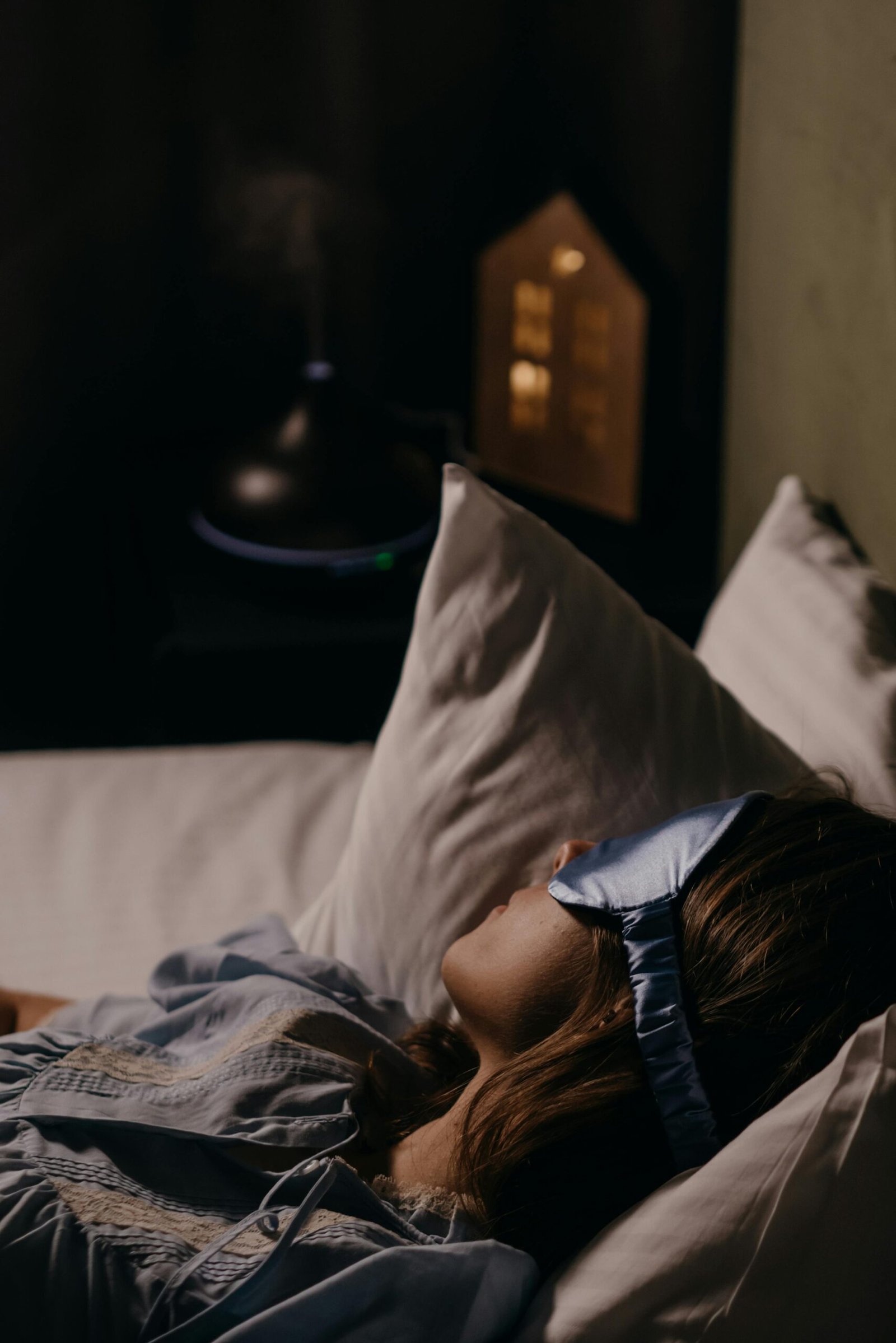
The Surprising Connection Between Sleep and Your Mental Health
Poor sleep doesn’t just leave you tired — it fundamentally reshapes how your brain processes emotions, handles stress, and maintains psychological balance. If you’ve ever wondered why sleep is essential for mental wellness, the answer runs far deeper than simply feeling rested. A landmark 2024 study published in Nature Mental Health found that adults sleeping fewer than six hours per night were 2.5 times more likely to experience clinically significant anxiety and depression symptoms than those getting seven to nine hours. That single statistic tells a powerful story — and it’s one worth understanding fully.
Whether you’re navigating a stressful season of life, managing an existing mental health condition, or simply trying to feel more emotionally grounded day to day, your sleep habits are quietly running the show behind the scenes. At The Calm Harbour, we believe that good mental wellness starts with the basics — and nothing is more foundational than the hours you spend with your eyes closed.
In this guide, we’ll walk you through the science, the emotional realities, and the practical strategies that can help you use sleep as one of your most powerful mental wellness tools.
This article is for informational purposes only and is not a substitute for professional medical advice.
What Happens Inside Your Brain While You Sleep
Sleep is not a passive state. While your body rests, your brain is working with extraordinary purpose — consolidating memories, regulating neurochemistry, and literally cleaning itself of toxic waste products that accumulate during waking hours.
The Glymphatic System: Your Brain’s Overnight Cleaning Crew
One of the most remarkable discoveries in modern neuroscience is the glymphatic system — a network of channels that flushes metabolic waste, including beta-amyloid proteins, from the brain during deep sleep. When this process is disrupted by poor or insufficient sleep, these proteins accumulate and have been linked to cognitive decline and mood dysregulation. Think of it as your brain running a full defragmentation cycle every night. Skip too many nights, and the system starts to slow down in ways that affect not just your memory but your emotional resilience.
Sleep Stages and Emotional Regulation
Your brain cycles through several distinct sleep stages throughout the night, and each plays a unique role in mental wellness:
- NREM Stage 1 and 2 (Light Sleep): Your nervous system begins to downshift. Heart rate slows, and the brain starts processing and consolidating information from the day.
- NREM Stage 3 (Deep Sleep / Slow-Wave Sleep): This is where physical restoration peaks. Growth hormone is released, the immune system strengthens, and the brain undergoes its deepest cleansing cycle. Disruption here is closely linked to depression and emotional blunting.
- REM Sleep (Rapid Eye Movement): Perhaps the most critical stage for mental wellness. During REM, the brain processes emotional experiences, essentially replaying and recontextualising difficult memories in a neurochemical environment stripped of cortisol. This is why you often wake from a good night’s sleep feeling better able to cope with a problem that felt overwhelming the night before.
Research from UC Berkeley’s Sleep and Neuroimaging Lab has shown that sleep-deprived individuals show up to a 60% greater amygdala reactivity to negative stimuli — meaning the brain’s emotional alarm system becomes dramatically over-sensitive without adequate rest. This is a key reason why understanding why sleep is essential for mental wellness goes well beyond simply avoiding fatigue.
How Sleep Deprivation Affects Mental Health Conditions
For many people, poor sleep isn’t just a symptom of mental health struggles — it’s an active contributor to them. The relationship is bidirectional and, for some conditions, becomes a reinforcing cycle that’s genuinely difficult to break without targeted intervention.
Anxiety and the Overthinking Loop
When you’re running on insufficient sleep, your prefrontal cortex — responsible for rational thinking and emotional regulation — becomes less effective. At the same time, the amygdala ramps up. This neurological imbalance creates the perfect storm for anxious thinking: your brain becomes more reactive to perceived threats while simultaneously losing its capacity to rationally evaluate them. A 2025 review in Sleep Medicine Reviews confirmed that chronic sleep restriction consistently predicts the onset and worsening of generalised anxiety disorder, with insomnia identified as one of the strongest modifiable risk factors.
Depression and Disrupted Sleep Architecture
The link between sleep and depression is one of the most well-documented in psychiatric research. More than 90% of people with major depressive disorder report significant sleep disturbances, but emerging evidence suggests the causality often runs the other way — meaning poor sleep actively precipitates depressive episodes, not just the reverse. Disruptions to REM sleep in particular appear to interfere with the brain’s ability to process and resolve negative emotional experiences, leaving people more emotionally burdened over time.
PTSD, Trauma, and Nighttime Vulnerabilities
For individuals living with post-traumatic stress disorder, sleep is particularly fraught. Nightmares, hyperarousal, and fragmented sleep architecture are hallmark features of PTSD, and they dramatically impair daytime emotional functioning. Yet sleep-focused therapies — including Image Rehearsal Therapy (IRT) and Cognitive Behavioural Therapy for Insomnia (CBT-I) — have shown significant promise in reducing trauma symptoms by directly addressing sleep quality, suggesting that improving sleep can create meaningful upstream benefits for trauma recovery.
The Hormonal and Neurochemical Story
Sleep is intricately tied to the body’s hormonal rhythms, and those hormones are deeply woven into your emotional experience.
Cortisol, Melatonin, and the Stress Response
Under normal circumstances, cortisol — your primary stress hormone — follows a predictable daily rhythm, peaking in the morning to help you wake and alert, then tapering through the day. Poor sleep disrupts this rhythm, leading to elevated baseline cortisol levels that leave you feeling wired, tense, and emotionally reactive even on days that don’t warrant it. Meanwhile, melatonin — the hormone that signals nighttime and promotes sleep onset — is suppressed by artificial light exposure in the evening, a genuinely modern challenge that our nervous systems haven’t caught up with yet.
Serotonin, Dopamine, and Emotional Balance
Many people are surprised to learn that sleep quality directly influences serotonin and dopamine production — two neurotransmitters central to mood stability, motivation, and feelings of reward. Chronic sleep deprivation has been shown to reduce dopamine receptor sensitivity, which means that even when dopamine is produced, the brain responds to it less effectively. This contributes to the flat, unmotivated, low-pleasure state that many sleep-deprived individuals describe — one that can be difficult to distinguish from mild depression without careful assessment.
The Role of Sleep in Emotional Memory Consolidation
Here’s something genuinely fascinating: your brain doesn’t store memories the way a hard drive stores files. It actively curates them during sleep, strengthening emotionally significant memories and weakening irrelevant ones. REM sleep appears to play a specific role in stripping the emotional charge from difficult memories — a process that psychologists call “sleep-dependent emotional processing.” When this process is disrupted night after night, emotional wounds that might otherwise heal naturally can become more entrenched.
Building a Sleep Foundation: Practical Strategies That Actually Work
Understanding why sleep is essential for mental wellness is one thing — actually getting more of it is another. The good news is that sleep science in 2026 offers a clearer, more evidence-based toolkit than ever before.
Prioritise Sleep Consistency Over Sleep Duration
One of the most counterintuitive findings in modern sleep research is that when you sleep matters nearly as much as how long you sleep. Going to bed and waking at consistent times — even on weekends — anchors your circadian rhythm and improves sleep quality significantly. A consistent wake time is particularly powerful because it regulates adenosine buildup (your brain’s sleep pressure signal), making it easier to fall asleep the following night.
Create a Sensory Wind-Down Ritual
Your nervous system doesn’t switch off on command. It needs approximately 60 to 90 minutes of gradually decreasing stimulation before it can transition into sleep mode. Consider building a wind-down ritual that deliberately engages the parasympathetic nervous system:
- Dim overhead lights and switch to warm-toned lamps an hour before bed
- Reduce screen exposure or use blue-light blocking settings on devices
- Engage in slow, low-stakes activities: gentle stretching, light reading, journaling, or breathwork
- Keep the bedroom cool — research supports an ambient temperature of around 65–68°F (18–20°C) as optimal for sleep onset
- Use consistent sensory cues like a calming scent (lavender has modest but real evidence behind it) to signal bedtime to your brain
Address Anxiety That Surfaces at Bedtime
For many people, bedtime is the first quiet moment of the day — and that quiet is promptly filled by racing thoughts. A practical technique supported by cognitive behavioural approaches is the “scheduled worry period”: setting aside 15–20 minutes in the early evening (not immediately before bed) to actively write down worries and potential next steps. By externalising concerns onto paper, you give your brain permission to let them go, rather than rehearsing them at midnight.
Be Thoughtful About Caffeine and Alcohol
Caffeine has a half-life of approximately five to seven hours in most adults — meaning a 3pm coffee still has half its stimulant effect active at 8pm or 9pm. For those sensitive to caffeine, even earlier cutoffs may be warranted. Alcohol deserves particular attention: while it does accelerate sleep onset, it significantly suppresses REM sleep and causes sleep fragmentation in the second half of the night, leaving you physiologically under-rested despite hours in bed.
Consider CBT-I Before Medication
Cognitive Behavioural Therapy for Insomnia (CBT-I) is now firmly established as the first-line treatment for chronic insomnia by sleep medicine bodies in the US, UK, Canada, and Australia. Unlike sleep medications, CBT-I addresses the underlying thought patterns and behaviours that perpetuate poor sleep. Multiple large-scale trials show it produces durable improvements — often more lasting than pharmacological approaches — and it’s now widely available through therapists, digital programs, and even some GP referrals.
Special Considerations Across Life Stages and Circumstances
Sleep needs and challenges shift considerably across different life stages and circumstances, and mental wellness strategies should reflect that reality.
Adolescents and Young Adults
Teenagers experience a genuine biological shift in circadian rhythm — their bodies naturally push toward later sleep and wake times, a phenomenon known as “sleep phase delay.” Forcing early schedules against this biology consistently results in chronic sleep deprivation, which 2025 data from the American Academy of Sleep Medicine links strongly to elevated rates of adolescent depression, anxiety, and risk-taking behaviour. Advocating for later school start times and creating screen-free sleep environments are among the highest-impact changes families can make.
Perimenopause and Menopause
Hormonal shifts during perimenopause and menopause significantly disrupt sleep architecture, with night sweats, increased awakenings, and reduced deep sleep being common complaints. These sleep disturbances are directly linked to the elevated rates of depression and anxiety seen during this life stage. Working with a healthcare provider to address sleep disruption — whether through hormone therapy, CBT-I, or other evidence-based approaches — can produce meaningful improvements in both sleep and mood.
Shift Workers and Those with Irregular Schedules
If your work schedule forces you to sleep against your natural circadian rhythm, you’re facing a genuinely harder challenge. Strategies such as strategic light exposure management, consistent anchor sleep periods, and melatonin supplementation at appropriate times can help, but ideally, these should be guided by a sleep specialist who understands the unique pressures of shift work on mental health.
Frequently Asked Questions
How many hours of sleep do adults actually need for good mental health?
Most adults require between seven and nine hours of sleep per night for optimal mental and physical health, according to the National Sleep Foundation and equivalent bodies in the UK, Canada, and Australia. However, individual variation exists — a small percentage of adults genuinely function well on slightly more or less. What matters most is how you feel: if you regularly need an alarm to wake up, feel sluggish during the day, or notice mood instability, you’re likely not getting enough quality sleep.
Can improving sleep really help with depression and anxiety?
Yes — and the evidence is increasingly clear on this point. Multiple randomised controlled trials have shown that improving sleep quality, particularly through CBT-I, produces measurable reductions in depression and anxiety symptoms independent of other treatments. Sleep improvement isn’t a replacement for professional mental health care, but it’s one of the most powerful lifestyle levers available to support emotional wellbeing. If you’re experiencing significant depression or anxiety, please reach out to a qualified mental health professional.
What’s the difference between insomnia and just having a few bad nights?
Occasional poor sleep is entirely normal and typically resolves on its own once the triggering stressor passes. Insomnia, by clinical definition, involves difficulty falling or staying asleep at least three nights per week for three months or more, accompanied by meaningful daytime impairment. If your sleep difficulties have persisted for more than a few weeks and are affecting your mood, concentration, or daily functioning, it’s worth discussing this with your doctor or a sleep specialist.
Is it harmful to catch up on sleep on weekends?
The concept of “sleep banking” is appealing but only partially effective. While some research suggests that extended weekend sleep can partially offset certain physiological deficits from weekday deprivation, it does not fully reverse the cognitive and emotional effects of accumulated sleep debt. More problematically, sleeping in significantly on weekends disrupts your circadian rhythm, making it harder to fall asleep Sunday night — perpetuating the cycle. Prioritising consistent, adequate sleep throughout the week is far more beneficial than attempting weekend recovery.
Does exercise help with sleep and mental health simultaneously?
Absolutely — and this is one of the most reliable positive feedback loops available to you. Regular aerobic exercise has been shown to increase deep slow-wave sleep, reduce sleep onset latency, and improve overall sleep quality. Simultaneously, exercise is a well-established intervention for depression and anxiety, partly because it promotes neurogenesis and regulates the HPA (hypothalamic-pituitary-adrenal) axis that governs stress responses. Even 20–30 minutes of moderate-intensity movement most days can produce meaningful benefits for both sleep and mental wellness.
Are sleep tracking devices helpful or harmful for sleep anxiety?
Sleep trackers can be genuinely useful for identifying broad patterns — such as consistently late bedtimes or high resting heart rates — but they come with a significant caveat. A growing clinical phenomenon called “orthosomnia” describes the sleep anxiety that develops when people become overly focused on optimising their tracker data. If checking your sleep score each morning increases your anxiety or leaves you feeling worse, it may be counterproductive. Use tracking data as a broad guide, not a daily performance report.
What should I do if I wake up in the middle of the night and can’t get back to sleep?
This is one of the most common sleep complaints, and the standard advice from sleep specialists is counterintuitive: don’t lie in bed struggling. If you’ve been awake for more than 20 minutes, get up and move to another room. Do something calming and low-stimulation — light reading under dim light, gentle stretching, or slow breathing exercises — and return to bed only when you feel genuinely sleepy. This approach, called stimulus control therapy, helps prevent your brain from associating the bed with wakefulness and frustration, which is a key driver of chronic insomnia.
Your Next Step Toward Restful Nights and Steadier Days
Understanding why sleep is essential for mental wellness isn’t just an intellectual exercise — it’s an invitation to treat your nightly rest with the same seriousness you’d give any other pillar of health. Sleep is not a luxury. It is not laziness. It is the biological foundation upon which your emotional life, your relationships, your resilience, and your capacity for joy are built, night after night.
The encouraging truth is that even modest improvements in sleep quality can produce noticeable shifts in mood, stress tolerance, and overall mental clarity within days. You don’t have to overhaul everything at once. Start with one change — a consistent wake time, a calmer wind-down routine, or a conversation with your doctor if sleep difficulties have been lingering. Each small step forward compounds over time into something genuinely transformative.
At The Calm Harbour, we’re here to walk alongside you through all of it — the sleepless nights, the hopeful mornings, and every quiet moment in between. You deserve rest. And rest, it turns out, is one of the most profound acts of self-care available to you.
This article is for informational purposes only and is not a substitute for professional medical advice. If you are experiencing significant sleep difficulties or mental health challenges, please consult a qualified healthcare professional.
Leave a Reply