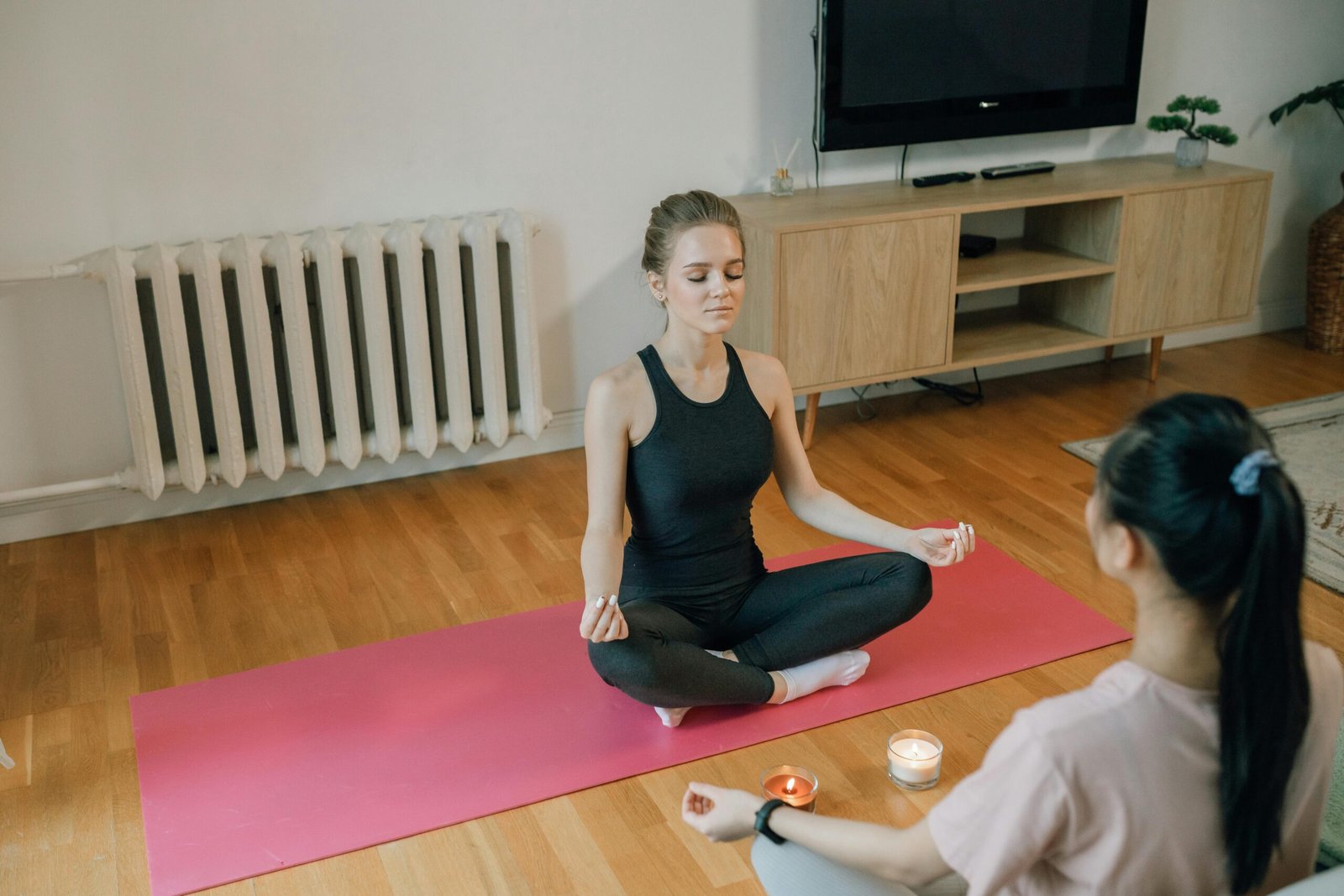
Why So Many People Are Turning to Meditation in 2026
Meditation is one of the most researched, accessible, and genuinely life-changing habits you can build — and starting a meditation practice has never been more approachable than it is right now. Whether you’ve tried it before and given up, or you’re completely new to the idea, this guide is your honest, warm, no-nonsense companion for beginning something that could quietly transform how you think, feel, and move through your days.
We’re living through a period of collective exhaustion. A 2025 report by the American Psychological Association found that 77% of adults in the United States regularly experience physical symptoms caused by stress, and similar trends are mirrored across the UK, Canada, Australia, and New Zealand. Meanwhile, global interest in mindfulness and meditation has grown by over 300% in the last decade, with app downloads, meditation studios, and workplace wellbeing programs all pointing to one undeniable truth: people are desperate for a way to feel better, and they’re finding it through meditation.
But here’s the thing — starting a meditation practice doesn’t require a retreat in Bali, an expensive app subscription, or the ability to sit perfectly still for an hour. It requires a few minutes, an open mind, and a little guidance. That’s exactly what this article provides.
What Meditation Actually Is (and What It Isn’t)
Before you sit down and close your eyes, it helps to understand what you’re actually doing — and to clear up some common myths that trip beginners up before they even start.
The Simple Truth About Meditation
At its core, meditation is the practice of training your attention. That’s it. You’re not trying to empty your mind, achieve enlightenment, or suppress your thoughts. You’re practicing the skill of noticing where your attention goes and gently bringing it back to where you want it — usually the breath, a sound, a mantra, or a physical sensation.
Think of it like going to the gym for your brain. Each time your mind wanders (and it will, hundreds of times — that’s completely normal), and you notice that it’s wandered, you’ve just done one mental “rep.” Over time, that builds real neurological change. A landmark study published in the journal NeuroImage found that just eight weeks of consistent mindfulness meditation produced measurable increases in grey matter density in areas of the brain linked to emotional regulation, self-awareness, and stress response.
Common Myths That Hold Beginners Back
- “I can’t meditate because my mind won’t stop.” A busy mind isn’t a problem — it’s the whole point. Noticing the busyness IS the practice.
- “I need to meditate for a long time to see benefits.” Research from Harvard Medical School suggests even five to ten minutes of daily meditation can produce meaningful reductions in anxiety and stress.
- “Meditation is religious.” While meditation has roots in Buddhist and Hindu traditions, the secular, science-based forms practised by millions today are entirely non-religious.
- “I need to be good at it.” There’s no such thing as a perfect meditation session. Every session counts, even the chaotic ones.
The Science-Backed Benefits of a Regular Practice
One of the most encouraging things about starting a meditation practice in 2026 is how robust the evidence has become. We’re no longer talking about ancient wisdom alone — we’re talking about peer-reviewed research, brain scans, and clinical trials.
Mental Health Benefits
The connection between meditation and improved mental health is now well-established. A comprehensive meta-analysis published in JAMA Internal Medicine reviewed over 47 clinical trials and concluded that mindfulness meditation programs showed moderate evidence of improving anxiety, depression, and pain. For everyday stress — the kind that comes from overflowing inboxes, financial worries, and the relentless pace of modern life — meditation offers a genuine, drug-free tool for finding calm.
Regular practitioners often report greater emotional resilience, which means they don’t stop experiencing difficult emotions, but they become less swept away by them. They notice stress arising, rather than drowning in it. That shift alone can change everything.
Physical Health Benefits
The body and mind are not separate, and meditation makes that beautifully clear. Studies have shown that consistent meditation can lower cortisol levels (your primary stress hormone), reduce blood pressure, improve sleep quality, and even support immune function. The American Heart Association acknowledged in a 2024 scientific statement that meditation may be a useful adjunct in cardiovascular risk reduction — a remarkable recognition from mainstream medicine.
Cognitive and Productivity Benefits
For those in the UK, USA, Canada, Australia, and New Zealand who feel mentally scattered or perpetually distracted, meditation offers something increasingly rare: the ability to focus. Research from the University of California Santa Barbara demonstrated that just two weeks of mindfulness training significantly improved reading comprehension and working memory among college students. In a world of endless notifications and fractured attention, the ability to concentrate is becoming a genuine competitive advantage.
How to Actually Start: A Practical Step-by-Step Approach
This is the heart of starting a meditation practice — not the philosophy, but the practical doing. Here’s how to begin in a way that’s sustainable, enjoyable, and genuinely effective.
Step 1: Choose Your Style
There’s no single “correct” form of meditation. Here are the most beginner-friendly styles to consider:
- Breath awareness meditation: Simply focus on the sensation of your breath. When your mind wanders, return. This is the most widely researched and easiest to learn.
- Body scan meditation: Move your attention slowly through different parts of your body, noticing sensations without judgment. Excellent for stress relief and improving sleep.
- Guided meditation: A teacher or recording walks you through the session. Perfect for absolute beginners who feel lost sitting in silence.
- Loving-kindness meditation (Metta): Cultivating feelings of warmth and compassion toward yourself and others. Particularly helpful for self-criticism and social anxiety.
- Mantra meditation: Silently repeating a word or phrase to anchor attention. Transcendental Meditation uses this approach.
For most beginners, breath awareness or guided meditation is the gentlest entry point. You can always explore other styles once you’ve built a foundation.
Step 2: Set Up Your Environment
You don’t need a dedicated meditation room or special cushion, but a consistent spot helps signal to your brain that it’s time to wind down and turn inward. Choose somewhere reasonably quiet where you won’t be interrupted for your chosen duration. Sit comfortably — on a chair with your feet flat on the floor works perfectly well. The idea that you must sit cross-legged on the floor is a myth that stops many people before they begin.
Step 3: Start Embarrassingly Small
This is the advice that actually makes meditation stick. Start with just five minutes a day. Not twenty. Not ten. Five. The goal in your first two weeks isn’t depth — it’s consistency. A five-minute session you actually do is infinitely more valuable than a thirty-minute session you skip because it feels overwhelming.
Set a gentle timer (most phones have this built in) so you’re not clock-watching. Sit, close your eyes or soften your gaze downward, and simply notice your breath for five minutes. That’s the whole instruction. When you drift into thinking — and you will — just gently return. No frustration required.
Step 4: Anchor It to an Existing Habit
The most reliable way to make meditation a daily habit is to attach it to something you already do. This is called habit stacking, and it’s one of the most effective techniques in behavioural science. Meditate immediately after brushing your teeth in the morning, right before your morning coffee, or just after you sit down at your desk. The existing habit becomes the trigger for your new one.
Step 5: Track and Gradually Expand
Keep it simple — a small journal or even a tally on your phone notes works well. After two weeks of consistent five-minute sessions, bump it up to eight minutes. Then ten. Then fifteen. By three months in, many practitioners find themselves naturally wanting to sit for twenty to thirty minutes because they’ve begun to genuinely enjoy the stillness and clarity it brings.
Tools, Apps, and Resources Worth Knowing About
The meditation technology landscape in 2026 is rich, and while technology isn’t required, it can be enormously helpful for beginners who want guidance, accountability, and variety.
Apps and Digital Tools
Apps like Headspace, Calm, Insight Timer, and Ten Percent Happier all offer structured beginner courses with guided sessions ranging from three to thirty minutes. Insight Timer, in particular, has an extensive free library making it accessible regardless of budget. Wearable technology has also advanced significantly — devices like certain Garmin and Apple Watch models now include real-time stress and Heart Rate Variability (HRV) monitoring that can complement your practice by giving you biofeedback on how your body responds to meditation over time.
Books Worth Reading
If you prefer learning through reading, a few titles stand out for their clarity and evidence base: Wherever You Go, There You Are by Jon Kabat-Zinn is a timeless introduction to mindfulness. 10% Happier by Dan Harris is a refreshingly skeptical and funny account of a news anchor discovering meditation. The Miracle of Mindfulness by Thich Nhat Hanh is gentle, poetic, and deeply practical.
Community and Classes
Online and in-person meditation communities have expanded significantly across the USA, UK, Canada, Australia, and New Zealand. Many community centres, yoga studios, and wellness clinics now offer beginner meditation classes — often free or low cost. Sitting with others, even virtually, can provide motivation and a sense of shared purpose that makes the practice feel less solitary.
Common Challenges and How to Move Through Them
Starting a meditation practice is simple, but it isn’t always easy. Knowing what to expect takes the sting out of the difficult moments.
Restlessness and Boredom
In the first few weeks, sitting still can feel deeply uncomfortable. We’re not used to doing nothing. Restlessness and boredom are completely normal, and here’s a reframe that helps: they’re not obstacles to meditation — they’re the content of your meditation. When you notice boredom, you’re being mindful. You’re observing your inner experience without running from it. That’s exactly the skill you’re building.
Falling Asleep
Many beginners drift off during meditation, especially in the early morning or evening. If this happens consistently, try meditating with your eyes slightly open, or sit up straighter. Meditating right after caffeine rather than right before sleep can also help. Falling asleep once in a while isn’t a failure — it’s just a sign your body needed rest.
Inconsistency and “Starting Over”
Missing a day — or a week — doesn’t erase your progress. The habit isn’t destroyed; it’s just paused. The most common mistake beginners make is treating a lapse as a failure and abandoning the practice entirely. In reality, returning after a break is itself an act of mindfulness. Every morning is a new beginning, and the door to your practice is always open.
Wondering “Am I Doing It Right?”
This thought will visit you often. The answer is almost certainly yes. If you sat, you intended to meditate, and you noticed your thoughts — you did it right. There’s no special feeling you’re supposed to achieve, no blissful state you’re failing to reach. Some sessions feel peaceful; others feel chaotic. Both are valid. Both are productive.
Frequently Asked Questions About Starting a Meditation Practice
How long does it take to see results from meditation?
Most beginners notice subtle shifts — slightly less reactivity, improved sleep, or small moments of calm — within two to four weeks of consistent daily practice. More significant changes in mood, focus, and stress levels typically become apparent after eight weeks, which aligns with the duration of most evidence-based Mindfulness-Based Stress Reduction (MBSR) programs. That said, even a single session can produce an immediate sense of relaxation, so you don’t have to wait weeks to feel something.
What is the best time of day to meditate?
The best time is whatever time you’ll actually do it consistently. That said, morning meditation is particularly popular because it sets a calm, intentional tone for the day before the busyness takes over. Many seasoned practitioners also enjoy a brief session in the early evening to decompress from the day. Avoid meditating immediately before bed if you find it makes you too alert, and experiment to find what naturally fits your rhythm.
Is it normal for my mind to wander constantly during meditation?
Completely and entirely normal — even for experienced meditators. A wandering mind isn’t a sign you’re failing; it’s simply what minds do. The practice isn’t about preventing mind-wandering; it’s about noticing when it happens and returning your focus without judgment. Each return is a moment of genuine mindfulness. Over time, you may notice the gaps between wandering thoughts get slightly longer, but a busy mind never fully stops — and that’s perfectly fine.
Do I need to sit cross-legged on the floor to meditate properly?
Not at all. The most important thing is that your posture is comfortable enough to stay relatively still, but alert enough that you don’t fall asleep. Sitting upright in a chair with your feet flat on the floor is an excellent meditation posture. You can also meditate lying down (though sleep is more likely), walking, or standing. Traditional floor postures like the lotus position are options, not requirements — especially for beginners dealing with tight hips or back discomfort.
Can meditation help with anxiety and depression?
Evidence strongly suggests it can be a valuable tool. The previously mentioned JAMA meta-analysis found mindfulness meditation produced meaningful improvements in anxiety and depression symptoms across dozens of trials. In the UK, mindfulness-based cognitive therapy (MBCT) is now recommended by the National Institute for Health and Care Excellence (NICE) for preventing relapse in recurrent depression. However, meditation works best as part of a broader mental health approach — it is not a replacement for therapy or medication when those are clinically indicated. Please speak with a qualified healthcare professional if you’re experiencing significant mental health challenges.
How do I stop feeling self-conscious or silly when I meditate?
This feeling is incredibly common, particularly in the first few sessions. It usually fades quickly once the practice becomes familiar. A few things that help: meditate alone until you feel more comfortable, use guided audio so you have something to focus on beyond your own discomfort, and remind yourself that feeling awkward about something new is a sign of growth, not failure. Millions of people around the world — including high-performing executives, athletes, and healthcare workers — meditate daily. There’s nothing silly about choosing to care for your mind.
What if I have tried meditation before and it didn’t work for me?
This deserves a thoughtful answer. “It didn’t work” usually means one of a few things: the sessions were too long and felt unsustainable, there was no guidance and the silence felt overwhelming, or expectations of immediate bliss went unmet. Try again with a different approach — start with just five minutes of guided meditation (Insight Timer has hundreds of free options), remove any expectation of how it should feel, and commit to two weeks before evaluating. Many people who “can’t meditate” discover they simply hadn’t found the right entry point yet.
Starting a meditation practice is one of the kindest things you can do for yourself — not because it will fix everything, but because it gives you a quiet place to land no matter what life throws at you. You don’t need to be spiritually inclined, perfectly calm, or especially disciplined. You just need five minutes, a little curiosity, and the willingness to begin. The science is clear, the benefits are real, and the only thing standing between you and a calmer, more grounded version of your daily life is starting. So close this tab, find a comfortable seat, set a five-minute timer, and take a breath. That’s all. Everything else follows from there. You’ve got this — and thecalmharbour.com is here to support every step of your journey.
This article is for informational purposes only and is not a substitute for professional medical advice. If you are experiencing significant mental health challenges, please consult a qualified healthcare professional.
Leave a Reply